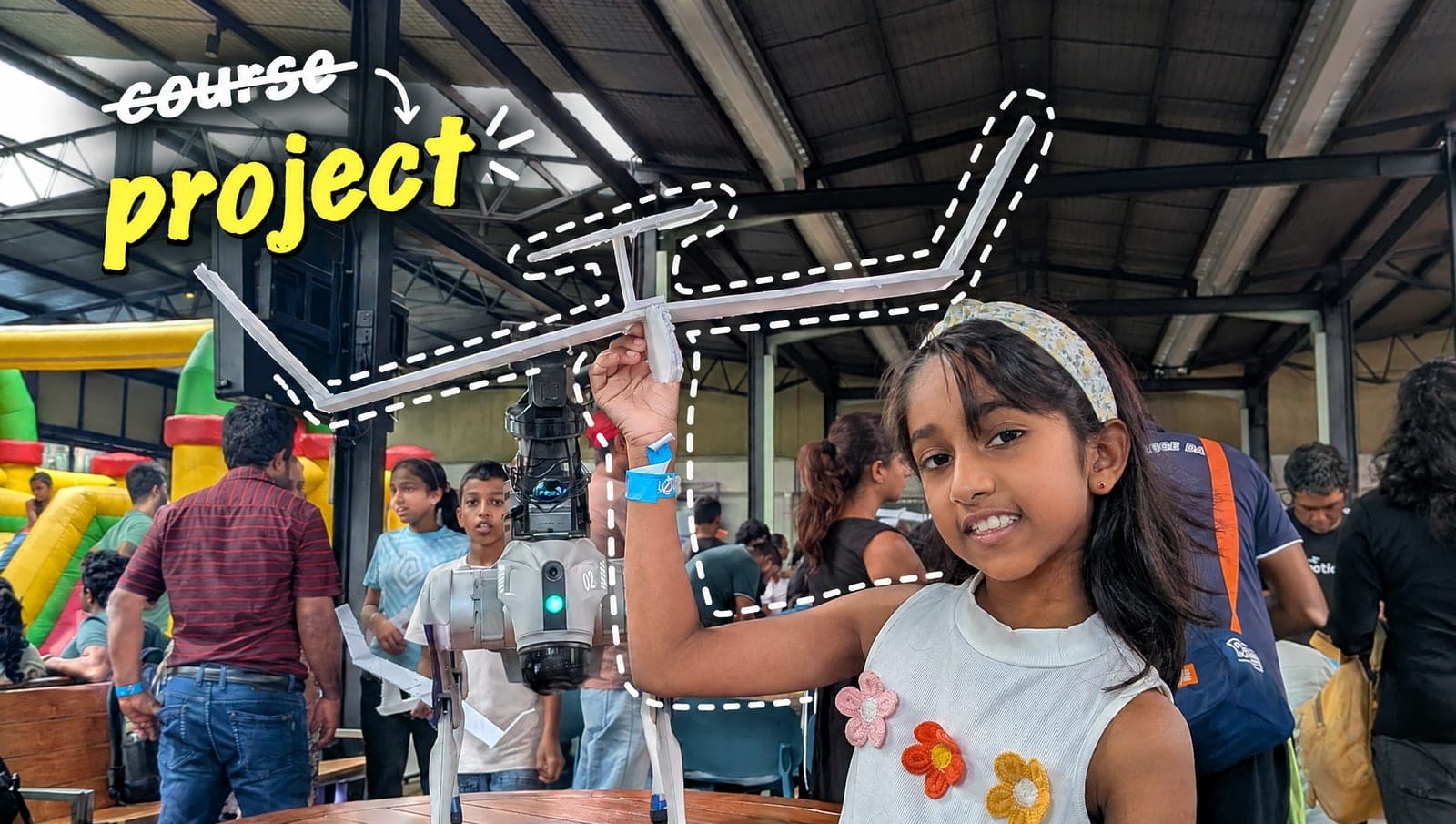
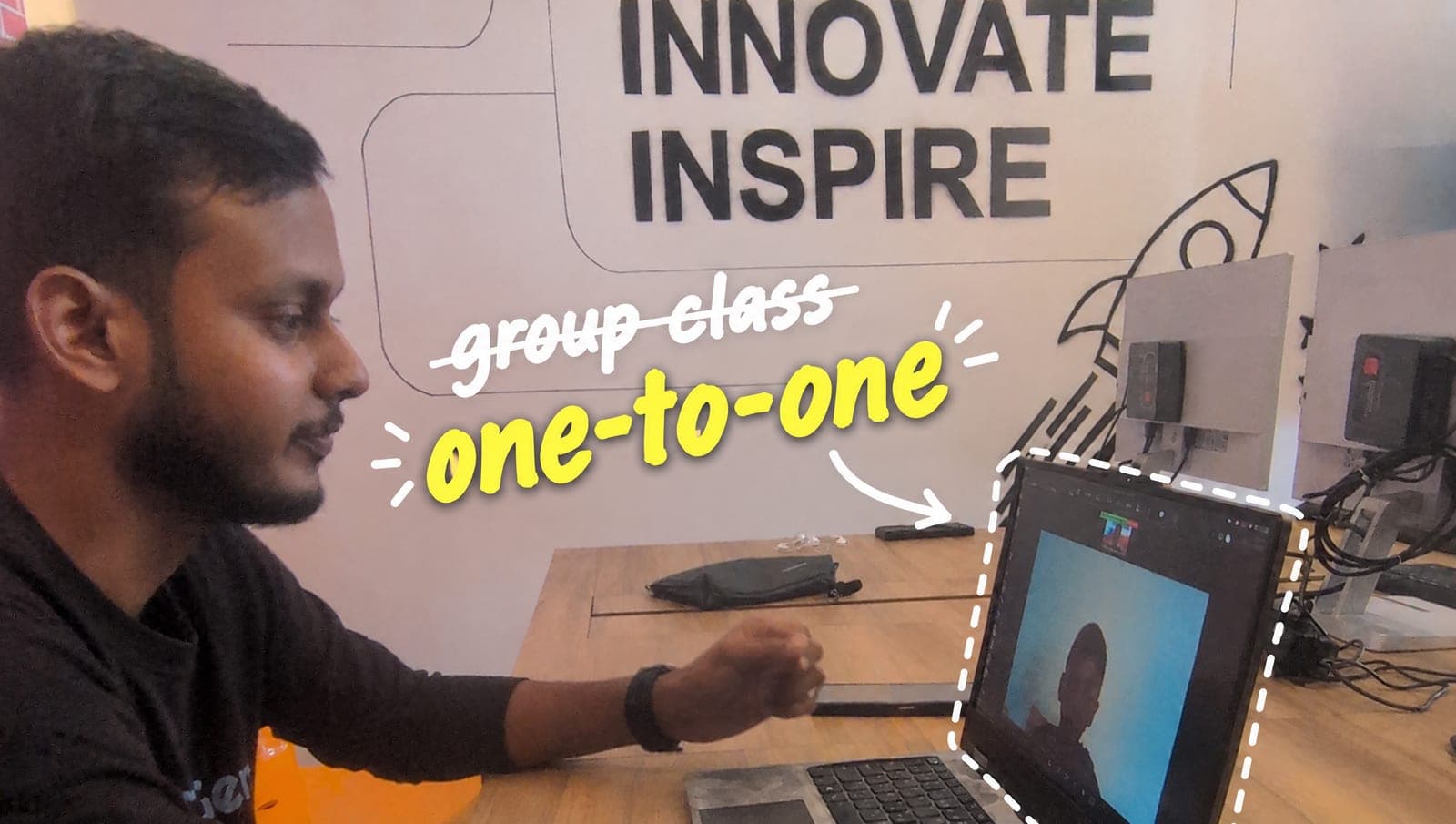
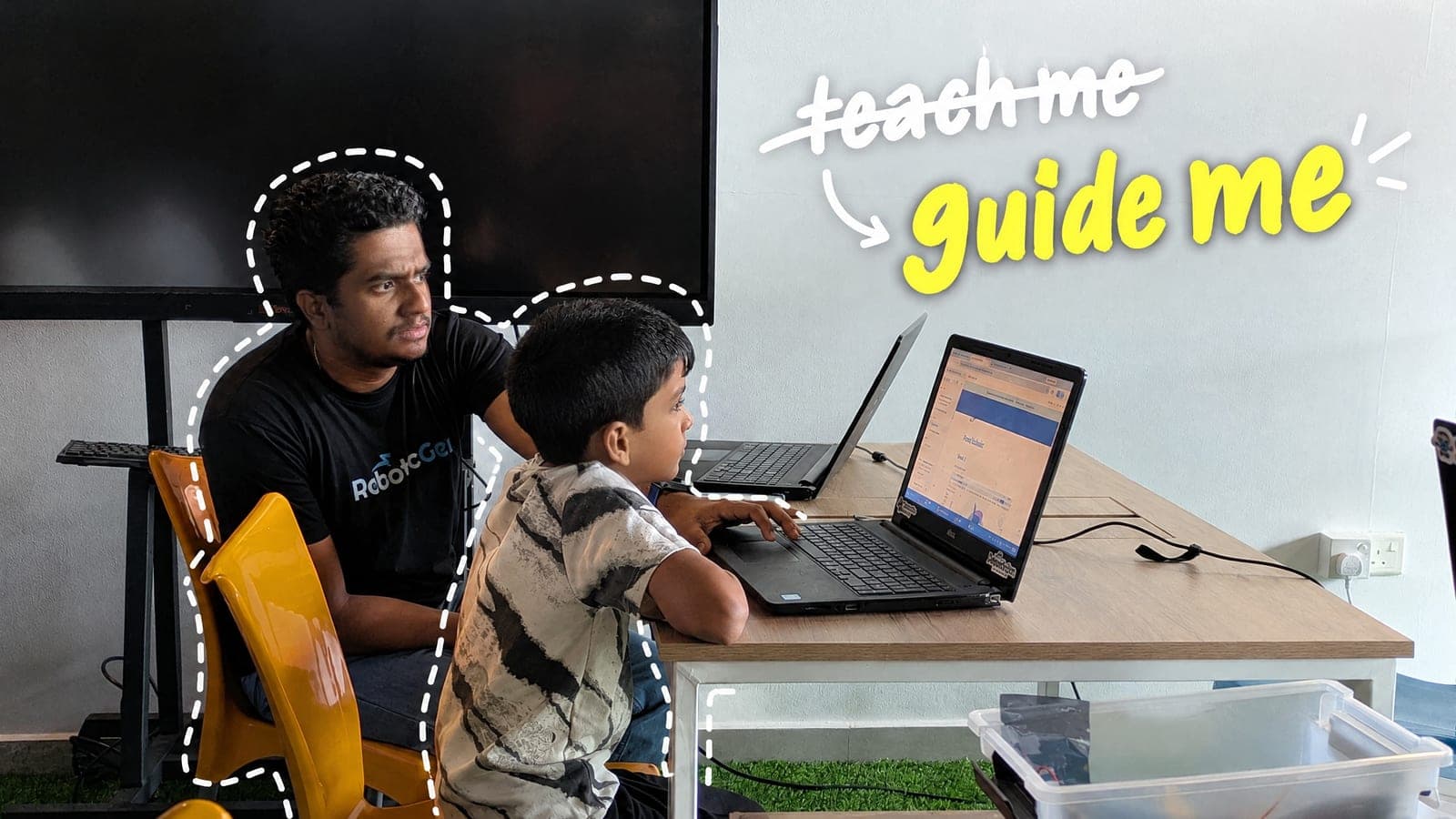
From screen time to maker time: changing what screens are for
Banning screens rarely works, and the evidence on harm is mixed. Why what children do on a screen matters more, and how to turn watching into making.

Deepana Ishtaweera, Founder, RoboticGen
· 4 min read
Most parents have handed a child a phone to get through a long queue, a restaurant meal or a meltdown. I don't think that makes anyone a bad parent. Screens arrive early now: in the United States, 40% of children have their own tablet by age two (opens in a new tab), and 58% by age four. Taking technology away completely isn't realistic, and I don't think it's even the right goal. The better question is what the screen is for.
What the evidence actually says
Start with the calm version, because the debate is loud. Some researchers, most famously Jonathan Haidt in The Anxious Generation, argue that phone-based childhoods are driving a rise in mental illness. Others reply that the claim is not supported by the science (opens in a new tab), and a review of 25 earlier reviews found the links between social media and well-being mostly weak or inconsistent (opens in a new tab). In one study of more than 350,000 teenagers, technology use explained less than half of one percent (opens in a new tab) of the differences in their well-being.
The guidance reflects that uncertainty. The World Health Organization recommends no screen time before age two and at most an hour a day for two- to four-year-olds (opens in a new tab), with less being better. For older children, the UK's Royal College of Paediatrics and Child Health says it is unable to recommend a cut-off (opens in a new tab). The American Academy of Pediatrics now asks parents to think beyond hours and look at what screens are crowding out (opens in a new tab): sleep, play, conversation.
Researchers increasingly agree that "screen time" is too blunt a measure (opens in a new tab). An hour of scrolling and an hour of building a game both count as an hour.
The real gap: watching versus making
What children do on screens is overwhelmingly watching. American 8- to 12-year-olds spend about five and a half hours a day on entertainment screens, and only about 8 minutes of that creating (opens in a new tab) something: art, music or writing. Teenagers spend 14 minutes out of more than eight hours. Under 3% of the time goes on making.
For young children, what's on the screen matters too. Across 42 studies, educational programmes and watching together (opens in a new tab) went with better language skills, while background television went with worse.
And the phone handed over to stop a meltdown has a cost that isn't the screen itself. In a study of 422 three- to five-year-olds, children whose parents often calmed them with a device became more emotionally reactive months later (opens in a new tab). The link appeared mainly in boys, the effect was small and the study observational, but the authors' explanation rings true: the device replaces practice at calming down.
Changing what a screen is for
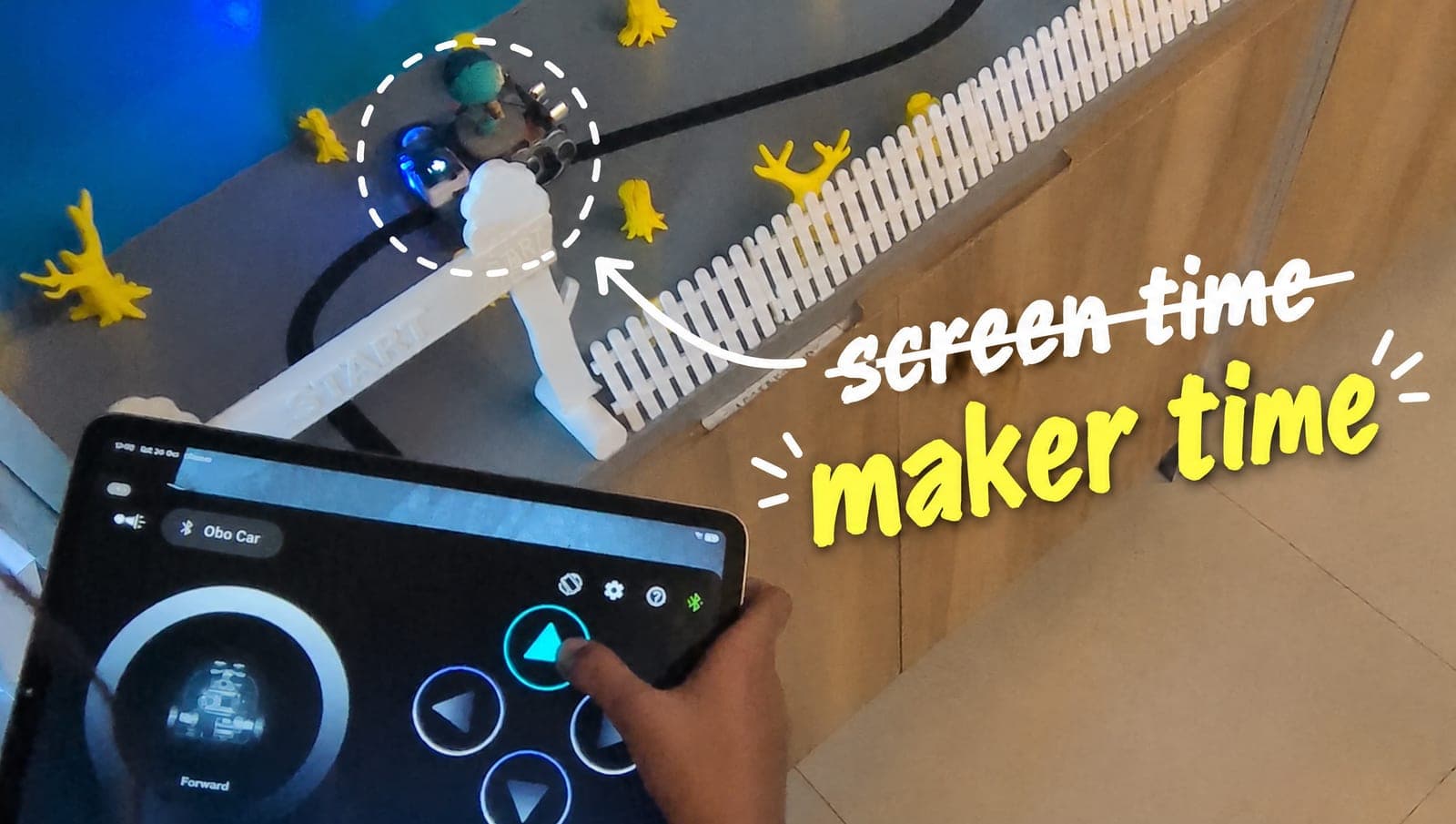
The tablet in this clip could be playing cartoons. Instead it is the controller for a robot car, and the child holding it is deciding where the car goes, watching what happens and adjusting. Same screen, different job.
That shift is where the evidence is most encouraging. A review of 105 studies found that people who learned to program got better at other kinds of thinking too, most strongly creative thinking, maths and reflecting on their own thinking (opens in a new tab). The effect on school grades was smaller, and studies with stronger comparisons found smaller gains, but the direction was clear: making things with technology exercises the mind in ways that watching does not.
It can even start with television. Our series GenAlpha on Ahasa TV shows a new build every week, with step-by-step instructions to build along at home. It is screen time that ends with something on the table.
Problems worth solving
A screen becomes a tool when there is a problem to solve. Children who build only for points get bored; children who build for a reason keep going. That's why many of our projects start from a real need, often one of the United Nations Sustainable Development Goals: a grip that helps people with stiff hands hold everyday things, a fish feeder that feeds the fish on a timer, a system one of our students designed to watch over stored grain so less food spoils. Each one asks the child to use technology for someone, not just to pass the time.
Five things parents can try
- Ask what the screen is replacing. Sleep, outdoor play and dinner-table conversation are worth protecting first.
- Count making, not just minutes. "Did you make anything today?" is a better question than "How long were you on it?"
- Use both rules and conversation. Across 52 studies, rules cut screen time more, while talking about and sharing media reduced risks more (opens in a new tab). Children need both.
- Keep the hour before bed screen-free. It is the one limit the UK paediatricians' guidance is clear about.
- Swap one show a week for one build. A build-along video, a kit or a simple coding game is a small, realistic start.
The goal isn't less technology
Our children will spend their lives surrounded by screens. We can't change that, and we shouldn't want to. What we can change is whether they grow up only watching technology or knowing how to use it to make something and solve a problem. I would rather a child spend an hour steering a robot they programmed than ten minutes being told screens are bad.